
What is CRM (Customer Relationship Management) - a system for managing customer relationships
Home » Resources » Frequently asked questions » What is CRM (Customer Relationship Management)?
- What does CRM mean?
- What is a software CRM?
- CRM system objectives
- Which departments can benefit from using CRM software?
- Mobile CRM software functionalities – project management software
- Advantages of using mobile systems
- CRM software vs. ERP
- ERP system with CRM functionalities
- Benefits of using ERP CRM software

Customer Relationship Management (CRM) is a complete software system that helps companies effectively manage their relationships with their current and potential customers. The main goal of a CRM system is to help companies develop and maintain strong relationships with their customers by providing more personalized services tailored to their specific needs.
We will discuss what CRM is, how CRM software works, and what benefits the Customer Relationship Management solution brings in the following lines.
What does CRM mean?
CRM definition
CRM (Customer Relationship Management) is a complete software system that manages both the external activities of a company, related to customers, prospects and business partners, and the internal activities, including those related to employees, departments and others.
From an external perspective, customers who interact with the company perceive it as a unitary entity, even when interacting with employees from different positions and departments. CRM represents a combination of procedures, processes and strategies implemented in the organization, with the aim of unifying interactions with customers. Thus, all the information in the system is used to attract new categories of customers and develop new opportunities for existing ones.
What is a software CRM?
CRM is the acronym for the English term “Customer Relationship Management”. In the Romanian business environment, this term is usually used in expressions such as “crm software”, “crm system”, “crm application”, “soft crm”, “mobile crm software”, “erp crm software”.
CRM is a software application that specializes in managing all relationships and interactions with current or potential customers. CRM software handles both external and internal activity management. In other words, CRM handles all the ways in which customers interact with a business.
A CRM software gathers and analyzes all the data collected about customers, such as contact information, interactions with company representatives and partners, or purchases. The Customer Relationship Management application allows users to access this information and understand what happened at each touchpoint. This creates a complete profile of the customer and can establish a lasting relationship with them.
CRM system objectives
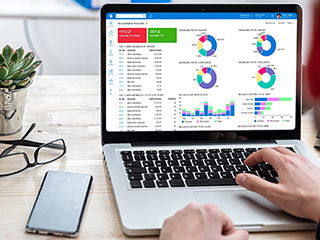
CRM systems integrate sales, analytics and marketing automation tools to collect customer data and enable sales teams to work more efficiently.
A CRM system software assists firms in keeping customer contact information up to date, tracking every customer interaction, managing customer accounts, and providing real-time visibility, streamlined operations, and business insights to sales, service, and marketing teams.
CRM (Customer Relationship Management) is a strategic method of customer relationship management, whose main objective is to develop and maintain long-term and profitable relationships with the company’s customers, through the efficient management of information about them.
Mobile and desktop CRM software solutions
By implementing a CRM software system, a company can:
- Monitor and record the history of customer interactions, thus gaining a deeper understanding of their current and future needs
- Efficiently manage customer data by automating relevant processes
- Automate the sales process, thus the sales flow is simplified and accelerated
- Improve customer relationships by offering personalized services adapted to the individual needs of each one

Which departments can benefit from using CRM software?
-
CRM software for Marketing
Because a CRM system has the role of planning, organizing and managing the company's marketing activities. The marketing module included in CRM software allows budgeting marketing campaigns, segmenting prospect lists or analyzing the results of promotional actions and covers a wide range of functionalities for the efficient management of marketing activities.
-
CRM software for Sales
The role of a CRM software in sales is to help the company improve the sales process and increase the number of contracts concluded in a certain period of time, by tracking and adjusting the sales pipeline, managing contracts, prospects and customers.
-
CRM software for Service and Support
A modern CRM software efficiently organizes internal activities and increases the quality of services offered to customers. By centralizing customer requests in mobile CRM software, dedicated staff can provide a quick and adequate response.
Mobile CRM software functionalities – project management software
The mobile CRM software system has functionalities that facilitate the management of customer and partner relationships, as well as the various activities carried out by sales and marketing teams. Among the main functionalities and additional integrations of the CRM software system are:
- Contact Management: CRM allows companies to maintain a database of information about customers and prospects. This database can be used to manage interactions with them, but also to improve the customer experience.
- Sales opportunity management: CRM software can automate sales processes, including tracking and managing offers, identifying sales opportunities, and converting them into sales orders.
- Sales team management: sales agents have access to contact data, centralized information about customer history, opportunities or interactions that could influence sales decisions. They automatically receive tasks related to potential customers, and the performance of sales teams can be measured according to the sales volume achieved.
- Self-service portal for customers: through this portal, customers can access their account information, documents or other data of interest at any time, place sales orders or make service requests, without having to contact a company representative.
- Marketing Management: CRM can be used to manage marketing activities, such as sending emails, creating campaigns, and building customer loyalty. The application provides insights into customer behavior by collecting data about them from websites, emails, social networks, and more.
- Customer data analysis: the ability to automatically store, track, and confirm customer data in a system will allow sales and marketing teams to optimize sales strategies and improve customer relationships.

Advantages of using mobile systems
Regardless of size or field of activity, a Customer Relationship Management (CRM) system offers multiple advantages for businesses, such as:
- Improving customer relationships – a CRM system efficiently manages every interaction with customers, from recording and tracking previous interactions to identifying their needs and preferences, which contributes to improving customer relationships, but also to building customer loyalty.
- Optimizing marketing strategies – a CRM software solution can optimize marketing processes by managing marketing campaigns, segmenting the customer database, analyzing results, and monitoring performance. This approach allows companies to develop and implement more targeted marketing strategies and evaluate their effectiveness, which means more efficient marketing and an increase in the return on marketing investments.
- Improving internal communication and collaboration – implementing a CRM system facilitates the exchange of information between company departments, such as sales, marketing, customer service and finance. This solution increases the efficiency of collaboration and promotes a deeper understanding of customer needs. Departments can communicate quickly and efficiently, ensuring better coordination of activities and, at the same time, an integrated approach to customer relationship management.
- Timely access to relevant data – using a mobile CRM software system allows for quick access to relevant data about customers and their activities. The sales team, support service or other departments can have a complete perspective on customer interactions and can access up-to-date information about contacts and other relevant details.
- Efficient sales team tracking – CRM application optimizes the entire sales process and covers all stages, from identifying potential customers to closing contracts. A high-performance CRM provides sales teams with a complete perspective on each sales opportunity and allows them to prioritize opportunities with high potential. Thus, sales and revenues increase, which will bring a positive impact on the company.
- Business processes are optimized – By implementing CRM software, business processes such as contact management, customer interaction monitoring, sales activity management, and customer service are automated and simplified. This automation leads to optimized workflows, reduced human errors, and increased operational efficiency.
CRM software vs. ERP
Enterprise Resource Planning (ERP) and Customer Relationship Management (CRM) software systems are two similar solutions, but they have different roles. Both facilitate the transfer of information between employees of a company and provide managers with reports related to recorded performances. Also, both CRM software and ERP contribute to achieving the objective of increasing the profitability of the organization and at the same time stimulate sales growth and cost reduction.
The main difference between ERP and CRM software is that the ERP system is primarily intended for managing financial data and is used by the finance department, while CRM focuses on customer information and data, used by the sales and customer service departments.

ERP applications are often called back-office systems, while CRM software solutions are considered front-office systems. Another important aspect is that some ERP systems include a CRM component, while CRM systems do not include ERP components.
A CRM software constantly aims to improve profitability by generating a higher volume of sales, while the ERP software system is meant to plan and efficiently manage resources to gain total control over costs and business processes.
On the other hand, both ERP and CRM software have as their main purpose to develop the business and increase the company’s profit. Both software systems can be implemented both on premises and in the cloud (Software as a Service – SaaS).
ERP system with CRM functionalities
The SeniorERP and SeniorXRP systems from Senior Software Romania have CRM functionalities integrated into the ERP software platform, which are accessible both from the web and from the mobile application.
The information collected and entered into CRM software can be accessed very easily, and the sales team has all the necessary resources at its disposal to achieve a rapid transition from potential customers to concluded contracts. Therefore, customer information and data are updated in real time, directly from the field.
In addition, users benefit from powerful marketing and sales tools, accessible anytime and anywhere. Among the advantages offered by the CRM component of ERP software are: organizing daily activities, setting notifications and quick access to sales, customer and inventory data.
Perfectly integrated within the ERP software system, the CRM component provides companies with information about: customers and potential customers, sales offers, customer orders, marketing forms, contacts, products and stocks, visits and tasks, opportunities.
Benefits of using ERP CRM software
The functionalities of an ERP CRM software help your company:
- Automate repetitive tasks
- Track new opportunities
- Optimize sales processes
- Improve response times
- Effective marketing activities
- Improve the quality of customer service