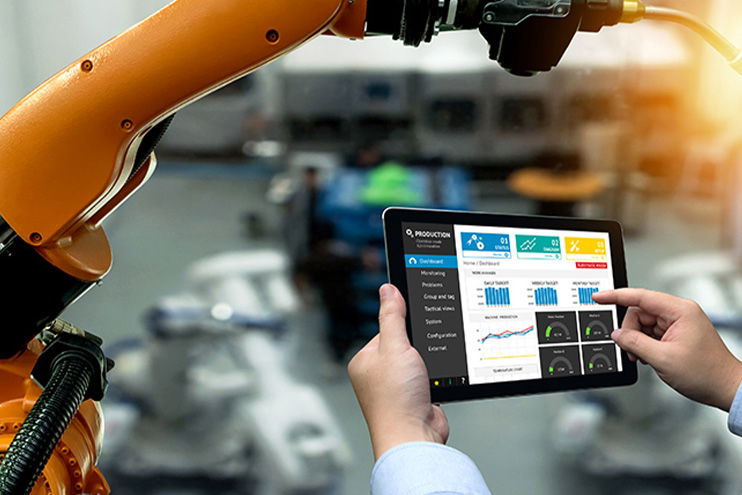
These stages provide a structured framework for organizations to optimally plan, schedule, and control their production processes. We will discuss each stage in detail below.
1. Demand forecasting and production capacity planning
The first stage of production planning and scheduling involves demand forecasting and capacity planning. Demand forecasting involves estimating future customer demand based on historical data, market trends, and other relevant factors. This helps manufacturers determine the expected volume and demand patterns for their products. Anticipating and understanding product demand helps manufacturers make the best choices in organizing and improving operations.
Once demand has been forecasted, capacity planning comes into play. This involves assessing the organization’s actual production capacity and capabilities to determine whether it can meet the expected demand. Factors such as labor availability, equipment capacity, and machine constraints are considered in this stage. The goal is to align production capacity with anticipated demand to avoid underutilization or over-utilization of resources.
APS for accurate forecasts and planning of production capacity
Through the availability of real-time data, efficient capacity planning and demand forecasting, the APS system allows companies to make well-informed decisions, while giving them the ability to react quickly to changes, allocate resources efficiently and align their production activities with customer requirements and business objectives.
2. Material planning and purchasing
The second stage focuses on inventory control, including materials planning and sourcing. In this stage, organizations identify the raw materials, components, and resources needed for production. The quantities needed are determined based on the manufacturing schedule and demand forecast.
Effective materials planning ensures timely availability of materials while minimizing storage costs and the risk of stockouts. Establishing strong supplier relationships is essential at this stage to ensure a reliable supply chain. Organizations collaborate with suppliers to coordinate delivery schedules, negotiate prices, and maintain consistent quality standards.
Efficient materials planning and, implicitly, procurement coordination contribute to optimizing production flow and preventing interruptions in the supply chain.
3. Production scheduling and resource allocation
The third stage involves detailed scheduling and resource allocation. This focuses on creating a comprehensive production calendar and activity planning to ensure smooth operations.
Scheduling involves assigning tasks to different workstations or production lines, taking into account factors such as equipment availability, setup times, and dependencies between jobs. Resource allocation is another important aspect of this stage. It involves determining the optimal allocation of labor, equipment, and other resources needed to accomplish specific production tasks. The goal of efficient scheduling and resource allocation is to create an efficient schedule that eliminates unnecessary downtime, bottlenecks, and delays.
4. Production control and monitoring
The fourth stage concerns the control and monitoring of production. Once production is underway, it is essential to follow the progress of the work and ensure compliance with the established schedule. Production control refers to monitoring the production process, identifying deviations or bottlenecks and taking corrective action, as appropriate. In this context, visibility into the schedule and the ability to constantly adjust the plan are crucial.
Effective production control also requires the ability to see the current load of the plan and, at the same time, to predict and adapt the production process to future changes. For example, if it is observed that a certain resource is overloaded, it is essential to be able to reschedule tasks to balance the load level, reduce downtime and improve overall efficiency.
5. Factory production schedule integration
Automating the planning and scheduling process by integrating production software into the factory is an essential step in the production process. Production software allows for faster, more flexible and therefore more efficient processes, and products are manufactured at a reduced cost, without affecting the quality of the goods.
By integrating production planning and scheduling software into the factory, companies will obtain a detailed picture of the number of items that can be produced in a certain period of time, as well as the equipment and resources needed for the project to proceed optimally.
Thanks to advanced calculation algorithms, the APS program balances production capacity with demand and, moreover, contributes to the planning of the entire production activity, starting from existing operations and resources to the need for raw materials or maintenance activities.
The manufacturing software program is often used in conjunction with the MES solution, which is responsible for executing the production plans generated by the APS. The information can be automatically transmitted to the workers in the production unit using the MES solution integrated into the manufacturing software to execute the activities in the factory.
What benefits have companies using Senior Software's APS system obtained?
Several companies have successfully implemented the APS solution, provided by Senior Software, and have achieved significant benefits, including improved productivity, reduced costs, increased customer satisfaction, and streamlined operations.